Indoor Herb Gardening for Apartment Windowsills
Indoor herb gardening turns a narrow apartment windowsill into a useful, living pantry. You do not need a backyard, raised beds, or expensive equipment to snip fresh flavor for breakfast and dinner. A few pots, a bright window, and a simple watering routine are enough to begin.
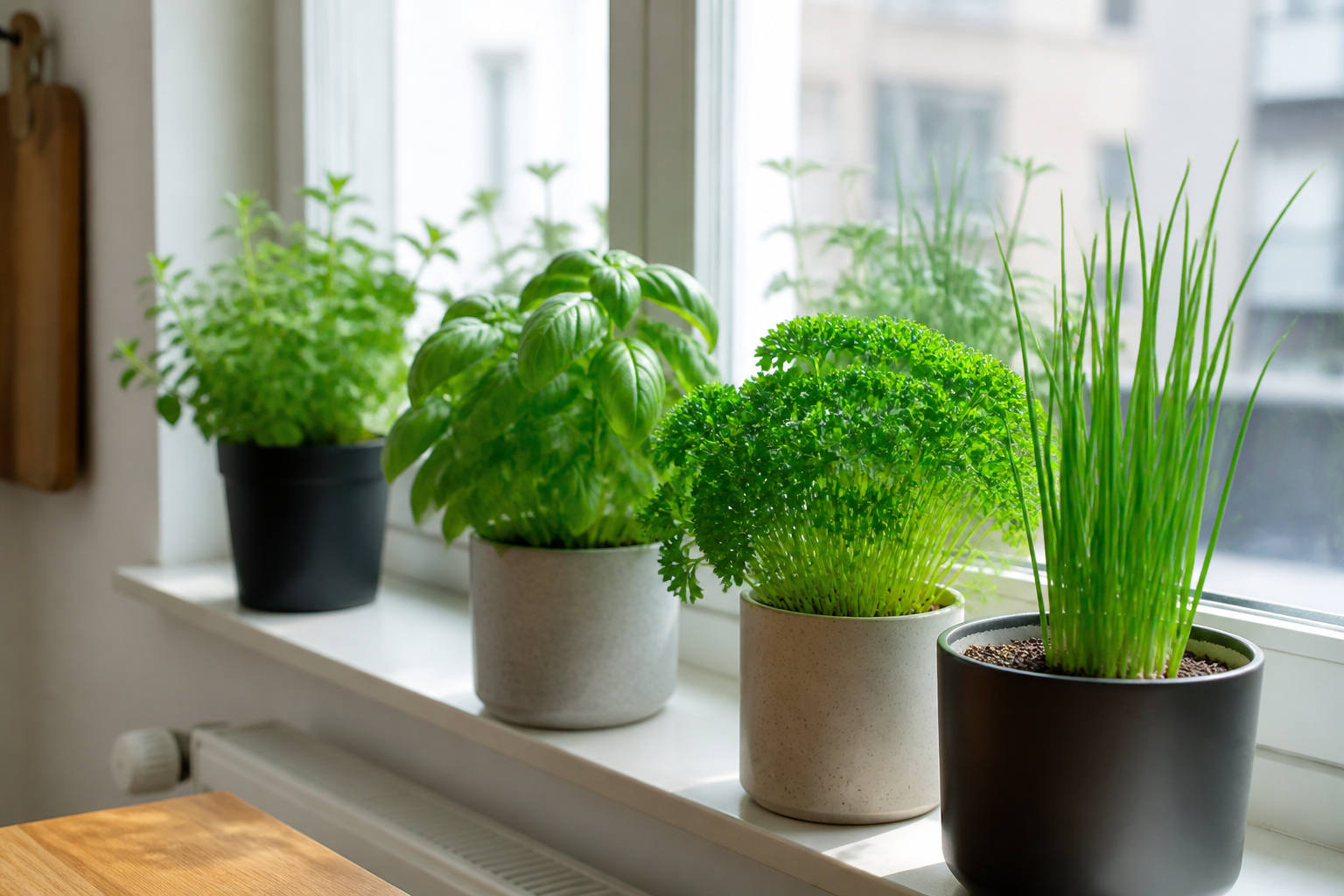
Why Indoor Herb Gardening Works in Apartments
This guide is for renters and small-space cooks who want a calm, practical way to grow basil, parsley, chives, and thyme at home. Start with the light you actually have, choose containers that fit safely, and make progress one plant at a time. The goal is not a perfect display; it is a dependable little harvest and the confidence to learn what your home can support.
Apartment herb gardening works because herbs are compact, forgiving, and useful often enough to keep you engaged. A small harvest feels rewarding, and regular trimming can keep a plant productive. Pots also let you move each herb toward its best light instead of asking one garden bed to suit every plant.
There is a practical rhythm here. You notice a dry surface while making coffee, rotate a pot on cleaning day, and cut what you need before cooking. That little routine replaces the guesswork that can make a large garden feel intimidating. Start with two or three herbs, learn their signals, and expand only when the care feels easy. Fresh leaves, a greener room, and a repeatable habit are meaningful results in a small home.
Light Windowsills Small Spaces
Light is the main ingredient, but a windowsill is not automatically a perfect growing spot. South- and west-facing windows usually offer the strongest direct sun; east-facing light is gentler and can suit parsley, chives, and young plants. Watch the leaves for a week. Long, weak stems suggest the plant is reaching, while bleached patches or hot, dry soil suggest too much intense afternoon sun.
Small spaces reward careful arrangement. Keep pots a little apart so air can move around them, use a saucer to protect the sill, and turn containers every few days for even growth. If natural light is limited, a basic grow light on a timer can help. Put it close enough to be useful without warming the leaves, and keep cords away from water. Measure the sill before buying anything; a safe, stable setup matters more than squeezing in one extra pot.
Getting Started Without a Yard
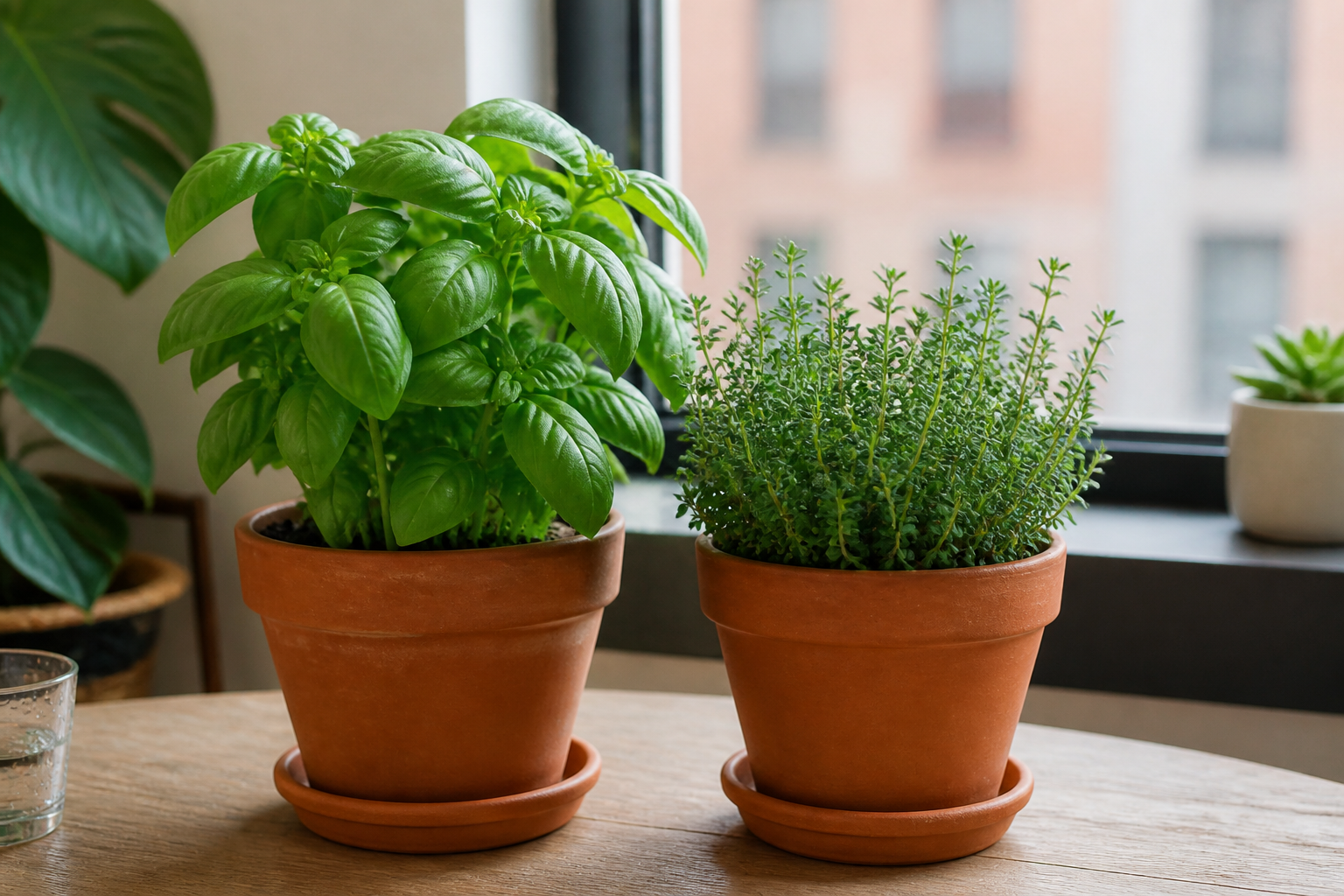
Start with one sunny (or brightest) windowsill and two or three easy culinary herbs: basil, chives, and parsley are forgiving beginners. Use pots with drainage holes plus a waterproof tray so your rental sill stays clean. Fill with a light indoor potting mix, not heavy garden soil. Water when the top inch feels dry; more herbs die from soggy roots than from thirst. If the room is dim, add a simple clip-on or upright grow light on a timer for 12-14 hours. Give plants a week to settle before you harvest - snip leaves, don't strip stems bare. Keep a short notes log (light hours, watering days, what flopped) so the next pot is easier than the first.
What You'll Learn Here
This site is built for indoor herb gardening in apartments and other small spaces. You'll get practical guides on choosing the right culinary herbs for low light, setting up windowsills and shelves without wrecking the lease, and picking pots, soil, and feed that fit a tiny footprint. We'll cover watering and drainage so you avoid mould and stained sills, plus renter-friendly grow lights when the sun isn't enough. Later pages dig into pests and pet-safe fixes, pruning and harvesting for the kitchen, and keeping herbs going year-round indoors. Start with the basics on this Home page, then move into the topic hubs as they're published. - each one is meant to answer one clear problem, not bury you in gardening jargon.
Honest Expectations
Indoor herb gardening rewards patience more than perfection. Some pots will thrive; some will yellow, stretch, or flop - that's normal, especially in winter light or with overwatering. Budget for a few starter plants, decent potting mix, trays, and optionally a small grow light; you don't need a greenhouse kit on day one. Expect a learning curve of a few weeks before harvests feel steady. Keep notes on what worked in your exact room (window direction, hours of light, how often you watered). That personal record beats generic advice, and it's how this site stays useful: real small-space constraints, clear steps, and honest talk about cost and failure - not miracle yields from a dark studio.
Explore the guides as they go live, try one new herb setup this week, and come back when something goes wrong - rescue pages are part of the plan. Happy growing from your windowsill.